The Methodology
The carried problem, the North Star, the specification, the AI partner, the build loop, failure, and the work required to move from prototype to product.
Build with AI
AI can produce software faster than most people can decide whether it is right. The harder work is holding onto the problem, making your standards explicit, and refusing to confuse a working screen with a trustworthy system.
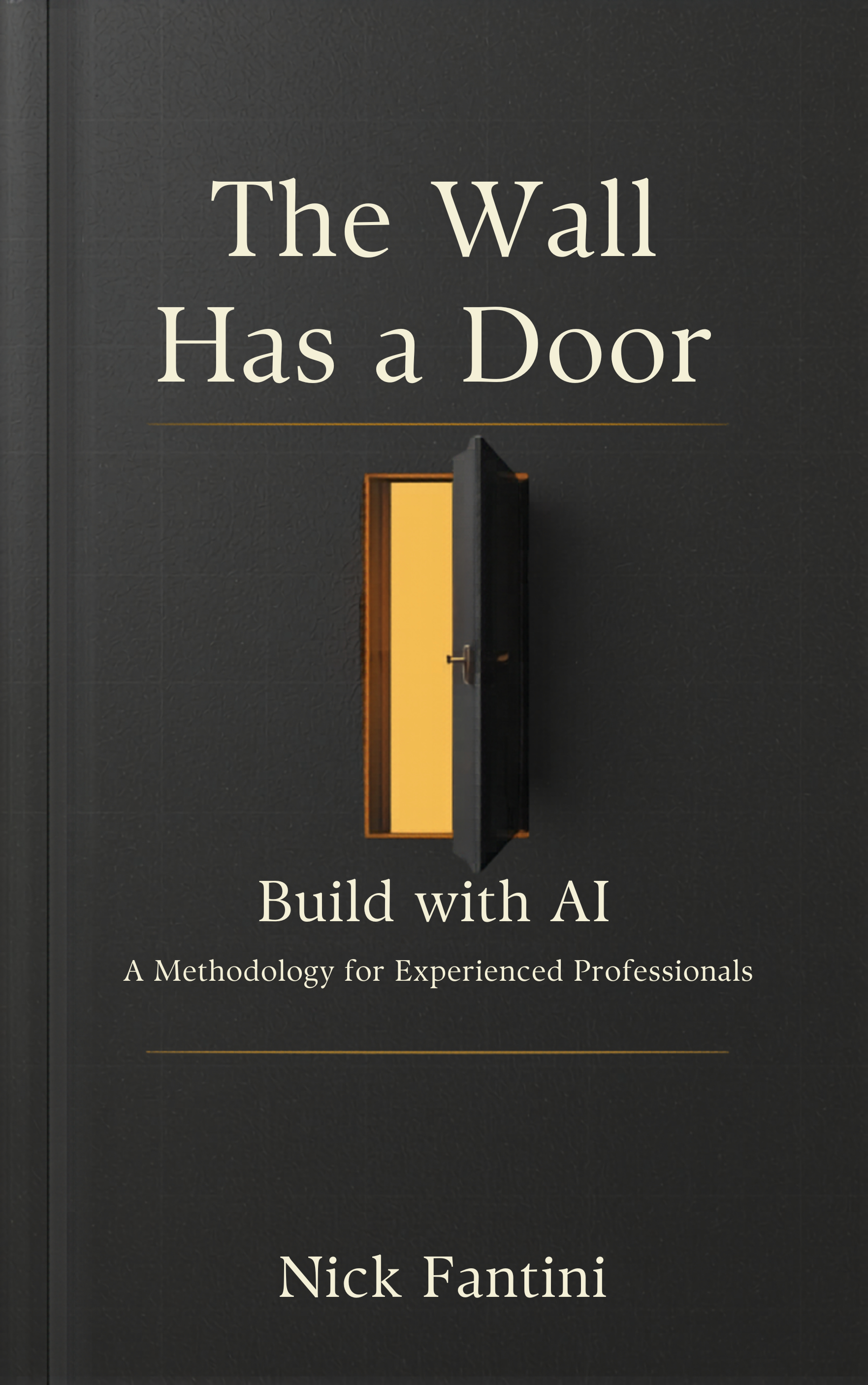
The Wall Has a Door follows one non-developer from a retirement question to working products and an agent system. It explains the method that emerged, where it failed, and what changed once the work had to survive beyond a single conversation.
The complete expanded edition is available now. Professional copy editing is underway, and Leanpub identifies the current editorial status on the book page.
You understand your problem better than anyone. You've been waiting for someone technical to care enough to build the right solution. This book gives you a way to build it yourself.
You have watched polished output arrive before the thinking was finished. The book shows how context, specifications, review, and evidence keep speed from becoming slop.
You are ready to move beyond a single chat into durable context, memory, review, ownership, and an agent system you can supervise.
The original edition explained how the first methodology emerged. The complete edition follows what happened next: speed created new failure modes, conversations became systems, and ownership became more important as the agents became more capable.
The carried problem, the North Star, the specification, the AI partner, the build loop, failure, and the work required to move from prototype to product.
The velocity trap, the slop problem, context, precise prompting, choosing the right executor, and discovering what the tools can actually do.
Memory, orchestration, supervision, feedback, long-term drift, ownership, and the move from one capable conversation to an agentic team.
What changes when domain experience can direct execution, where the limits still matter, and how to choose a first bounded build that reality can test.
Writing the book forced me to turn years of operational judgment into a method another person could inspect and use. The same sequence guides my work with restaurant operators: begin with the real problem, define what better means, keep the first promise small, test it against reality, and leave behind something the team can understand.
The book teaches you to direct the work. Hospitality operators can bring me a recurring problem instead. I use the same method to help them understand it, determine the next practical step, and carry out the work we agree on.

Twenty-five chapters, four parts, and a glossary that keeps AI partner, executor, agent, and orchestrator distinct.
Leanpub carries the current price and editorial-status details.